Gilgit Baltistan Weather: Complete Guide for Traveler’s
Gilgit Baltistan is one of the most spectacular mountain regions in Pakistan, famous for its dramatic landscapes, high peaks, glaciers, valleys, lakes and traditional mountain communities. However, because of its enormous variations in elevation, Gilgit Baltistan weather can change significantly from one valley to another.
For travelers planning a trip to Hunza, Skardu, Gilgit, Fairy Meadows, Ghizer, Shigar, Khaplu or other destinations in Northern Pakistan, understanding the Gilgit Baltistan weather is an important part of preparing for a comfortable and enjoyable journey.
The region experiences four distinct seasons, but the conditions are strongly influenced by altitude. A warm and sunny day in Gilgit may coincide with much cooler temperatures in Hunza or snowfall at higher elevations. Similarly, summer temperatures in lower valleys can be quite warm during the day while evenings remain pleasant.
According to the Pakistan Meteorological Department (PMD), Gilgit-Baltistan has its own network of weather observations and forecasts covering areas including Gilgit, Hunza, Ghizer, Diamer, Skardu, Shigar and Ghanche.
For this reason, travelers should always check the latest local forecast Gilgit Baltistan Weather before starting a journey, particularly when traveling through mountain passes or planning trekking and hiking activities.
Understanding Gilgit Baltistan Weather
Gilgit Baltistan is located among the Karakoram, Himalaya and Hindu Kush mountain systems, creating highly diverse weather conditions.
Elevation is one of the biggest factors affecting temperatures. Lower valleys such as Gilgit and parts of Diamer can become hot during summer, while higher valleys and mountain passes remain considerably cooler.
The official tourism information for Pakistan describes Gilgit as being situated at approximately 1,454 metres above sea level and notes that the main tourist season generally extends from April to October. It also gives Gilgit temperatures of up to around 33°C in May, with September maximum and minimum temperatures around 28°C and 11°C respectively.
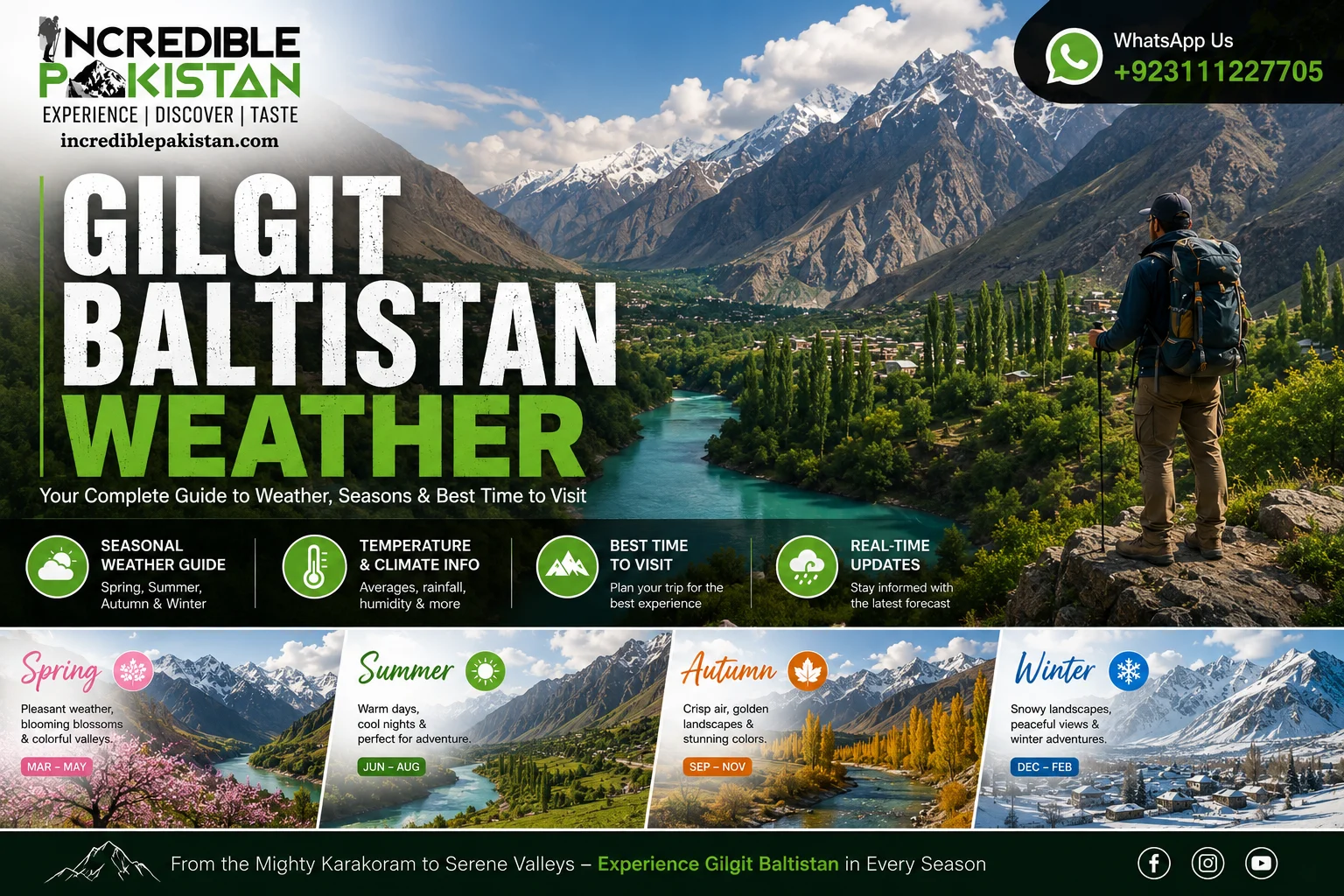
This variation makes Gilgit Baltistan attractive throughout much of the year. Spring brings blossoms, summer provides excellent conditions for sightseeing and mountain travel, autumn offers spectacular colours, and winter transforms many higher valleys into snowy landscapes.
Gilgit Baltistan Weather by Season
1. Spring Weather in Gilgit Baltistan – March to May
Spring is one of the most beautiful times to visit Gilgit Baltistan.
During March, the weather gradually begins transitioning from winter to spring. Snow remains visible on high mountains, while lower valleys start becoming greener. By April and May, fruit trees in places such as Hunza, Nagar and surrounding valleys begin producing spectacular blossom displays.
March
March can still feel cold, especially during mornings and evenings. Higher areas may continue to experience winter conditions, while lower valleys gradually become more comfortable.
April
April is particularly famous for cherry, apricot, almond and apple blossoms in several parts of Northern Pakistan. The combination of snow-covered mountains, green fields and flowering trees makes this an excellent month for photography and cultural tours.
May
May is generally warmer and marks the beginning of the more active tourism season. Gilgit can become relatively warm during the daytime, while higher valleys remain cooler.
Pakistan’s Meteorological Department seasonal outlooks show the normal seasonal pattern of temperatures increasing from March through May in Gilgit-Baltistan.
Recommended clothing: Layers, light jackets, comfortable trousers, walking shoes and a warmer jacket for evenings and higher elevations.
2. Summer Weather in Gilgit Baltistan – June to August
Summer is one of the busiest travel periods in Gilgit Baltistan.
The weather in many valleys is generally suitable for road trips, sightseeing, trekking, camping, boating and mountain excursions. However, travelers should not assume that the entire region remains cool throughout summer.
Lower-elevation areas can become hot, while higher mountain destinations remain significantly cooler.
Recent PMD observations illustrate this variation. On August 18, 2026, temperatures reached approximately 40.2°C in Gilgit, 37°C in Hunza and 42.5°C in Chilas, while higher or nearby areas experienced considerably different conditions.
At night, temperatures can fall considerably. On August 19, 2026, PMD recorded minimum temperatures of approximately 21.2°C in Gilgit, 17.5°C in Hunza and 17°C in Gupis.
This is why summer in Gilgit Baltistan does not mean uniformly hot weather.
June
June generally offers pleasant conditions for sightseeing and road travel. Mountain landscapes become increasingly green, and many tourist destinations become easier to access.
July
July is normally warm in lower valleys and can be very pleasant in higher destinations. However, summer weather can also bring thunderstorms and rainfall in parts of the region.
August
August remains a popular month for tourism, although travelers should pay attention to weather warnings, rainfall and mountain-road conditions.
PMD forecasts can include thunderstorms, strong winds and rain in Gilgit-Baltistan during summer weather systems.
Recommended clothing: Lightweight clothing for daytime, a light jacket or fleece for evenings, sunglasses, sunscreen and rain protection.
3. Autumn Weather in Gilgit Baltistan – September to November
Autumn is arguably one of the most visually impressive seasons in Northern Pakistan.
September generally provides comfortable temperatures, while October brings the famous autumn colours of Hunza, Nagar, Gilgit, Ghizer and other valleys.
The landscape changes dramatically as trees turn shades of yellow, orange and red against the backdrop of snow-covered mountains.
September
September is generally an excellent month for sightseeing and road tours. Daytime temperatures are becoming cooler, especially toward the end of the month.
October
October is famous for autumn foliage in Hunza and other valleys. It is an excellent period for photographers and travelers looking for scenic mountain landscapes.
November
By November, temperatures fall considerably and winter begins to establish itself, particularly at higher elevations.
Recommended clothing: Warm layers, fleece, jacket, comfortable shoes and additional winter clothing for higher-altitude destinations.
4. Winter Weather in Gilgit Baltistan – December to February
Winter brings a completely different side of Gilgit Baltistan.
Higher valleys and mountain passes can experience heavy snowfall, while lower valleys may remain relatively dry and cold.
Skardu, Hunza, Khaplu, Shigar, Astore and other destinations can experience freezing temperatures during winter, particularly at night.
Some roads and high mountain passes can become affected by snow and ice. Therefore, winter travel requires careful planning and regular monitoring of local weather and road conditions.
For travelers who enjoy snow-covered mountains, winter photography and peaceful mountain landscapes, winter can provide an unforgettable experience.
However, winter tours should be planned with flexibility because weather can affect transportation and road accessibility.
Gilgit Baltistan Weather in Major Tourist Destinations
Gilgit Weather
Gilgit is one of the main gateways to the region and generally has warmer conditions than many higher valleys.
Summer can be hot during the day, while spring and autumn are usually more comfortable for sightseeing.
Gilgit is also an important base for travelers heading toward Hunza, Naltar, Ghizer and other destinations.
Hunza Weather
Hunza Valley has a diverse climate because of its elevation and surrounding mountains.
Spring is famous for fruit blossoms, summer is suitable for sightseeing and outdoor activities, and autumn is particularly attractive because of the colourful foliage.
The official tourism guide identifies April to October as part of the main tourist season for Gilgit and surrounding northern destinations.
Skardu Weather
Skardu has a distinctive mountain-desert environment surrounded by enormous peaks.
Summer is generally suitable for visiting locations such as Upper Kachura Lake, Shangrila, Shigar, Khaplu, Deosai and the surrounding valleys.
The area can be very cold during winter, while spring and autumn offer beautiful scenery and changing colours.
Fairy Meadows Weather
Fairy Meadows is located at a much higher elevation than Gilgit city, so temperatures can be considerably cooler.
Summer is generally the most convenient season for visiting, while spring and autumn can bring colder conditions. Winter access may be difficult because of snowfall and mountain-road conditions.
Travelers should always check the latest conditions before planning a Fairy Meadows trip.
Best Time to Visit Gilgit Baltistan
The best time to visit Gilgit Baltistan depends on what you want to experience.
For Cherry & Apricot Blossoms
April to early May
Ideal for blossom photography, cultural experiences and scenic valley tours.
For Summer Holidays
June to August
Suitable for road trips, sightseeing, lakes, hiking and exploring higher valleys.
For Autumn Colors
October to early November
One of the best periods for photography and autumn foliage.
For Snow & Winter Landscapes
December to February
Best suited to travelers specifically looking for winter scenery and snow, with careful planning.
For a General Northern Pakistan Tour
May to October
This is generally the most convenient period for combining destinations such as Gilgit, Hunza, Skardu and other major tourist areas.
Does It Rain in Gilgit Baltistan?
Yes. Although many parts of Gilgit Baltistan have relatively dry mountain climates, rain and thunderstorms can occur, particularly during certain weather systems in spring and summer.
PMD provides forecasts and weather warnings for the region and has specific services covering mountain weather, hazards and related conditions.
Rainfall in mountainous terrain should be taken seriously because heavy rain can affect roads, streams and slopes.
Travelers should therefore check weather updates before long road journeys.
Does It Snow in Gilgit Baltistan?
Yes, snowfall is common in many high-altitude parts of Gilgit Baltistan during winter.
The amount of snowfall varies significantly according to altitude and location. High mountain passes and elevated valleys can receive substantial snow, while lower areas may receive less or remain comparatively dry.
Snow-covered mountains can remain visible well into spring, providing some of the region’s most spectacular scenery.
Is Gilgit Baltistan Weather Too Hot in Summer?
Not necessarily.
The answer depends heavily on altitude and location.
Some lower valleys can become very warm during the daytime, while higher areas remain cool. Recent PMD observations demonstrate substantial differences between locations within Gilgit-Baltistan.
This makes it possible to experience very different climates during the same Northern Pakistan tour.
For example, a traveler may experience warm weather in Gilgit and significantly cooler conditions while traveling toward higher valleys and mountain passes.
What Clothes Should You Pack for Gilgit Baltistan Weather?
Because weather can change quickly, layering is the best strategy.
For spring and autumn, pack:
- Light jacket
- Fleece or sweater
- Comfortable trousers
- Walking shoes
- Warm socks
- Sunglasses
- Rain jacket
For summer:
- Lightweight shirts
- Comfortable trousers
- Light jacket
- Hat or cap
- Sunglasses
- Sunscreen
- Rain protection
For winter:
- Heavy jacket
- Thermal layers
- Gloves
- Warm socks
- Winter shoes
- Hat
- Scarf
If your itinerary includes high-altitude destinations, always carry warmer clothing even when the weather in Gilgit or Islamabad is warm.
Gilgit Baltistan Weather and Road Travel in Gilgit Baltistan
Weather is particularly important when traveling by road in Northern Pakistan.
The Karakoram Highway and other mountain roads pass through valleys, steep slopes, river corridors and high mountain areas. Rain, snowfall, landslides, rockfalls and other natural events can occasionally affect travel conditions.
This is one reason travelers should avoid planning extremely tight itineraries.
A professional local tour operator can monitor conditions and make practical adjustments when necessary.
The Pakistan Meteorological Department provides forecasting, early warnings and information related to hazards including heavy rain, floods and glacier-related events.
Weather Safety Tips for Travelers
Before traveling in Gilgit Baltistan: Check the Gilgit Baltistan Weather forecast.
- Check the latest weather forecast.
- Carry appropriate clothing for changing temperatures.
- Keep your itinerary flexible during periods of bad weather.
- Ask your local guide about current road conditions.
- Avoid unnecessary travel during severe weather warnings.
- Carry water and basic personal supplies during long road journeys.
- Keep extra time for mountain-road travel.
- Follow local authorities’ instructions during weather emergencies.
- Check conditions before traveling to high-altitude passes.
- Keep your tour operator informed about any changes to your travel plans.
Why Travel with a Local Tour Operator?
Weather and road conditions can change quickly in mountainous regions. This is one reason traveling with an experienced local tour operator in Pakistan can be beneficial.
A local team can help travelers understand regional weather differences, select appropriate routes and adjust itineraries when conditions change.
Incredible Pakistan is a local tourism company offering private and customized tours across Pakistan, with a strong focus on Northern Pakistan and Gilgit-Baltistan.
Our local team helps travelers explore destinations such as Hunza, Gilgit, Skardu, Fairy Meadows, Ghizer, Shigar and Khaplu while providing practical support throughout the journey.
Whether you are planning a blossom tour, summer holiday, autumn photography trip or winter adventure, understanding the local weather is an important part of planning your Pakistan journey.
Frequently Asked Questions About Gilgit Baltistan Weather
What is the best month to visit Gilgit Baltistan?
April is excellent for blossom season, June to August is popular for summer travel, and October is particularly attractive for autumn colours.
What is the weather like in Gilgit in summer?
Gilgit can become quite warm during summer days, while nights are generally cooler. Conditions vary from one location to another.
Does Hunza get snow?
Yes. Hunza can experience winter snowfall, although the amount varies by location and elevation.
Is Skardu cold in summer?
Skardu can be warm during summer days, but evenings and higher-altitude destinations can remain cool.
When does snowfall start in Gilgit Baltistan?
Snowfall timing varies according to elevation and location. Higher areas generally experience winter conditions earlier than lower valleys.
Is Gilgit Baltistan suitable for tourists throughout the year?
Yes, but different seasons offer different experiences. Spring is ideal for blossoms, summer for general sightseeing, autumn for foliage and winter for snow landscapes.
Final Thoughts: Plan Your Trip Around the Weather
Gilgit Baltistan weather is one of the most important factors to consider when planning a trip to Northern Pakistan. The region’s dramatic differences in altitude create a fascinating variety of climates, from warm valley floors to cold high mountain environments.
Spring brings colourful blossoms, summer offers excellent opportunities for sightseeing and adventure, autumn transforms the valleys with spectacular foliage, and winter creates beautiful snow-covered landscapes.
For the most comfortable journey, choose your travel dates according to the experiences you want to enjoy and always check the latest official weather forecast before departure.
The Pakistan Meteorological Department’s current platform provides official forecasts, alerts and advisories for travelers and the public.
Planning your next Northern Pakistan adventure? Let Incredible Pakistan help you choose the right season, destinations and itinerary for your journey.