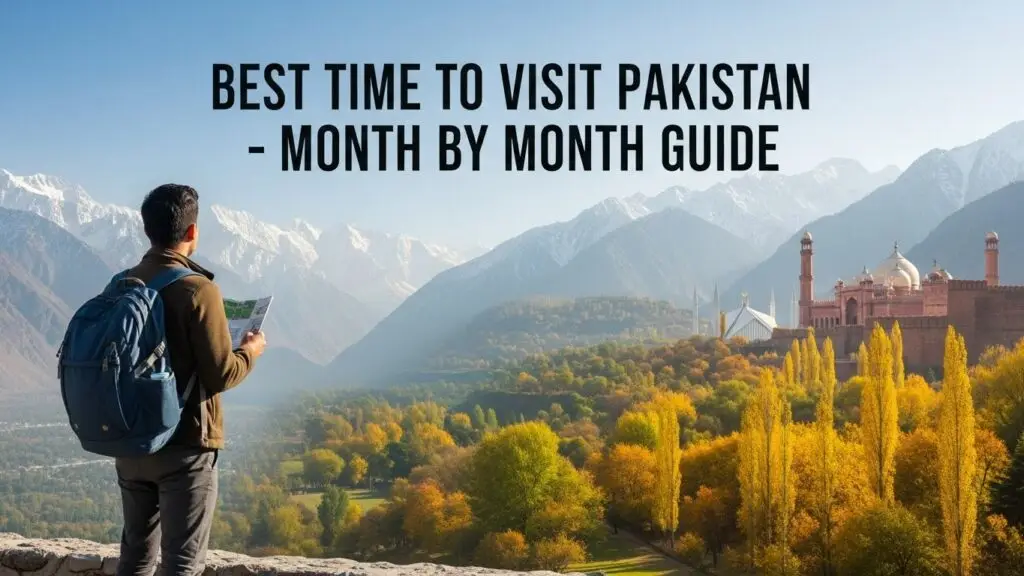
The Best Time to Visit Pakistan: A Month-by-Month Weather & Festival Guide
Pakistan is a country of extraordinary geographical and cultural diversity, stretching from the snow-covered peaks of the Karakoram and Himalayas to the deserts of Sindh and the beaches of the Arabian Sea. Because of this diversity, there is no single best time to visit Pakistan for every traveler. The ideal month depends on where you want to go and what you want to experience.
For mountain adventures, trekking, and exploring destinations such as Hunza, Skardu, Gilgit, and Chitral, the warmer months are generally the most practical. For historic cities such as Lahore, Islamabad, Multan, and Peshawar, spring and autumn can offer more comfortable conditions. Meanwhile, the cooler winter months can be excellent for exploring southern Pakistan, Punjab, and desert landscapes.
Pakistan also has a remarkable calendar of cultural celebrations. From the colorful spring traditions of Punjab and the Kalash festivals of Chitral to the famous Shandur Polo Festival and autumn cultural events, timing your journey around a local celebration can make your trip even more memorable. Pakistan’s official tourism resources highlight festivals ranging from the Shandur Polo Festival and Sibi Mela to the Mango Festival and desert jeep rallies.
Here is our month-by-month guide to help you decide when to visit Pakistan.
January – Winter Landscapes and Southern Pakistan
January is one of the coldest months in much of Pakistan, particularly in the northern mountains. Heavy snowfall can make some high-altitude areas difficult or impossible to access, but this also creates spectacular winter scenery.
If you enjoy snow, winter photography, or experiencing Pakistan’s colder mountain communities, January can be rewarding. However, travelers should plan carefully because mountain roads and passes may be affected by snow.
For warmer weather, consider destinations in Sindh and southern Punjab. Karachi, for example, can be much more comfortable in winter than during the intense heat of summer.
Best for: Karachi, Sindh, cultural sightseeing, winter photography, southern Pakistan.
February – Spring Begins in Punjab
February brings gradually improving weather to many lower-elevation areas. Lahore and other parts of Punjab begin transitioning toward spring, making this a potentially excellent time for city exploration and cultural experiences.
One of the notable seasonal celebrations is Basant, traditionally associated with the arrival of spring in Punjab. The Punjab government officially scheduled Basant Festival 2026 in Lahore for February 6–8 under a regulated framework.
Because festival arrangements and regulations can change from year to year, travelers should always verify current information before planning specifically around Basant.
Best for: Lahore, Punjab, cultural experiences, spring celebrations.
March – A Great Month for Culture and Comfortable Weather
March is one of the most attractive months for exploring many parts of Pakistan. Temperatures are generally becoming warmer without reaching the extreme heat that can arrive later in spring and summer.
It is an excellent time to combine major cities, historic attractions, food experiences, and cultural sites. Lahore’s gardens and historic architecture are particularly appealing during pleasant spring weather.
March is also associated with Nauroze/Navroz celebrations in northern communities, including parts of Gilgit-Baltistan and Chitral. Pakistan’s tourism information lists Nauroze among the cultural celebrations observed in these regions.
Best for: Lahore, Islamabad, cultural tours, heritage sightseeing, Gilgit-Baltistan cultural experiences.
April – Ideal for Heritage and Nature
April is a wonderful shoulder-season month for many travelers. The weather is warmer but, in many locations, still manageable for sightseeing.
Spring landscapes can be particularly beautiful, while the higher mountains remain considerably colder than the plains. This makes April suitable for travelers who want a combination of cultural exploration and nature without committing to the hottest part of the year.
Historic destinations such as Lahore, Taxila, Multan, and parts of Khyber Pakhtunkhwa can be included in a spring itinerary, although temperatures vary significantly by region.
Best for: Heritage tours, Islamabad, Lahore, Taxila, spring landscapes, cultural travel.
May – Kalash Spring Festival and the Start of Mountain Season
May marks an important transition in northern Pakistan. As temperatures rise, access to many mountain valleys improves.
One of the country’s most distinctive cultural events is the Joshi or Chilam Joshi Festival, celebrated by the Kalash community in the valleys around Chitral. The National Tourism Portal lists the festival for May 14–15, describing it as a celebration welcoming spring with traditional dancing, music, and food.
For travelers interested in responsible cultural tourism, visiting during a Kalash festival can provide a unique opportunity to learn about one of Pakistan’s distinctive living traditions. Visitors should be respectful of religious ceremonies, photography preferences, and local customs.
Best for: Chitral, Kalash Valleys, cultural tourism, spring landscapes.
June – Northern Pakistan Comes Alive
June is an exciting month for travelers heading north. Mountain destinations such as Hunza, Gilgit, and Skardu become increasingly accessible, although conditions can vary considerably depending on altitude and road conditions.
This is a strong month for scenic road trips, valleys, lakes, hiking, and photography. Lower-altitude cities can become very hot, so travelers planning a nationwide itinerary should account for major differences between the mountains and plains.
June is also increasingly associated with mountain festivals and outdoor activities. In 2026, the Shandur Polo Festival was officially announced for June 11–13, demonstrating why travelers should verify festival dates for the specific year of travel rather than relying on older calendars.
Best for: Hunza, Gilgit, Skardu, Chitral, mountain road trips, trekking.
July – The Best Month for High-Altitude Adventure
For many adventure travelers, July is one of the best times to visit northern Pakistan.
The high mountain valleys are at their summer best, and many routes become accessible after the winter season. The landscape can be exceptionally green, while snow remains visible on surrounding peaks.
July is also traditionally associated with the famous Shandur Polo Festival, held at Shandur Pass between Chitral and Gilgit-Baltistan. Pakistan’s tourism authorities describe Shandur as the world’s highest polo ground, at roughly 3,700 meters above sea level, with polo matches accompanied by music, dancing, and cultural activities.
The exact festival date can change, however, so always confirm the official schedule before booking transportation and accommodation.
Best for: Shandur, Chitral, Gilgit-Baltistan, trekking, polo, mountain photography.
August – Mountains, Independence Day and Summer Travel
August continues to be a popular month for northern Pakistan. Hunza, Skardu, Gilgit, Naran, Kaghan, and other mountain destinations can attract large numbers of domestic and international travelers.
Pakistan’s Independence Day is celebrated on August 14, with decorations, flags, public events, and celebrations across the country. The National Tourism Portal includes August 14 among Pakistan’s national celebrations.
If you are traveling during the peak summer season, book accommodation and transport in advance, particularly for popular northern destinations.
Keep in mind that monsoon conditions can affect some areas. Official tourism information for the Kaghan Valley notes that mid-July to mid-August can bring monsoon rains and occasional travel restrictions caused by rain and landslides in lower parts of the valley.
Best for: Hunza, Skardu, Naran, Kaghan, Independence Day celebrations, mountain scenery.
September – One of the Best Shoulder Months
September is often an excellent choice for travelers seeking a balance between summer accessibility and more comfortable conditions.
The extreme heat of the plains begins to ease, while many northern areas remain accessible. Autumn colors have not necessarily reached their peak everywhere, but the changing season starts creating beautiful scenery in mountain valleys.
Chitral’s Kalash communities also celebrate Phool around September, a harvest-related festival associated with grapes and walnuts, according to Pakistan’s tourism guide.
Best for: Chitral, Hunza, Gilgit-Baltistan, mountain photography, cultural travel.
October – Autumn in Northern Pakistan
October is arguably one of the most beautiful months for visiting northern Pakistan. The weather becomes cooler, and many mountain valleys begin displaying spectacular autumn colors.
Hunza and surrounding areas are particularly attractive for photographers, nature lovers, and travelers seeking scenic road trips. The combination of golden foliage, dramatic mountains, traditional villages, and clear autumn light can make October unforgettable.
Islamabad also becomes more comfortable as summer heat decreases.
Pakistan’s official tourism material lists Lok Mela, a folk festival in Islamabad, during the first week of October. The event showcases folk music, dances, crafts, and cultural traditions from across Pakistan.
Best for: Hunza, Gilgit, Islamabad, autumn photography, cultural festivals.
November – Mild Weather and Autumn Travel
November is another excellent month for exploring Pakistan, particularly if you prefer cooler temperatures and fewer peak-season crowds.
Northern Pakistan becomes significantly colder as winter approaches, but lower-elevation destinations can be very pleasant. Lahore, Islamabad, Multan, and Sindh can be attractive additions to an itinerary.
For photographers, November can still offer beautiful autumn scenery in selected northern valleys, although conditions vary with altitude and location.
Best for: Lahore, Islamabad, Sindh, cultural tours, late-autumn photography.
December – Winter Culture and Desert Adventures
December marks the beginning of winter travel. Northern mountain areas become cold and snowy, while some high-altitude roads may become inaccessible.
Instead of focusing exclusively on the mountains, consider exploring Pakistan’s southern and desert regions during this month. Cooler temperatures can make desert excursions and cultural sightseeing much more enjoyable than during the scorching summer.
Pakistan’s tourism authorities also promote desert experiences such as the Cholistan Desert Jeep Rally as part of the country’s winter tourism offerings.
December can therefore be an excellent choice for travelers interested in deserts, history, food, architecture, and cultural experiences rather than high-altitude trekking.
Best for: Cholistan, Sindh, Lahore, cultural sightseeing, desert adventures.
What Is the Best Time to Visit Pakistan?
The best time to visit Pakistan depends on your itinerary.
For northern Pakistan, particularly Hunza, Skardu, Gilgit, and many mountain valleys, June to October is generally the most useful travel window, with July through September offering excellent opportunities for summer mountain adventures.
For spring landscapes and cultural sightseeing, March to May is an attractive period.
For autumn colors in northern Pakistan, September and October are especially appealing.
For southern Pakistan, deserts, and lower-elevation cultural destinations, November to February can provide more comfortable conditions than the hotter months.
If festivals are your priority, consider planning around events such as Basant in Lahore, Kalash festivals in Chitral, Shandur Polo Festival, and Lok Mela in Islamabad. Festival dates may change, so always confirm the latest official schedule before finalizing your trip.
Pakistan Weather by Season
Spring: March to May
Spring is one of the most comfortable seasons for many cultural and sightseeing trips. Flowers bloom, temperatures rise gradually, and many destinations remain less crowded than during peak summer.
Summer: June to August
Summer is the prime season for many northern mountain destinations. While the plains can become extremely hot, high-altitude valleys offer much cooler conditions. Mountain weather can change quickly, so travelers should prepare for rain, cold evenings, and road disruptions.
Autumn: September to November
Autumn is an outstanding season for photography and scenic travel. Northern valleys can display brilliant foliage, while temperatures become increasingly pleasant in cities and lower-elevation areas.
Winter: December to February
Winter brings snow to the north and more comfortable temperatures to many southern and central destinations. It is a great season for travelers who want to explore cities, heritage, deserts, and coastal areas.
Tips for Planning Your Pakistan Trip
Before deciding when to travel, think about your main destination rather than treating Pakistan’s climate as one uniform pattern. The country covers a huge range of elevations and geographical zones, so conditions in Karachi can be completely different from those in Hunza or Skardu.
Check road conditions before traveling through mountain regions. Snow, rainfall, landslides, and seasonal road closures can affect travel plans. Pakistan’s tourism authorities specifically advise travelers to obtain current information about road conditions and to respect local environmental and cultural guidelines.
If you are planning trekking or camping at high altitude, consider hiring an experienced local guide and allow flexibility in your itinerary. Mountain weather can change rapidly.
Most importantly, travel respectfully. Pakistan’s cultural diversity is one of its greatest attractions, and responsible tourism helps protect the traditions, communities, landscapes, and heritage that make the country special.
Final Thoughts: When Should You Visit Pakistan?
There is truly no single best month to visit Pakistan. Instead, there is a best season for every kind of traveler.
Choose March to May for spring, culture, and comfortable sightseeing. Choose June to August for mountain adventures and high-altitude festivals. Choose September and October for spectacular autumn landscapes. Choose November to February for cities, deserts, heritage, and more comfortable travel in southern Pakistan.
Whether you want to explore the ancient streets of Lahore, experience the dramatic peaks of Hunza, discover the culture of Chitral, watch traditional polo at Shandur, or journey through the deserts of Sindh and Punjab, choosing the right season can transform your Pakistan holiday.
Frequently Asked Questions
What is the best month to visit Pakistan?
For an overall trip, September and October are excellent choices because they can combine pleasant conditions with spectacular northern scenery. However, June to August is better for many high-altitude mountain adventures.
What is the best time to visit Hunza Valley?
June through October is generally the most practical period for visiting Hunza, with autumn providing especially beautiful colors.
When is the Shandur Polo Festival held?
The festival is traditionally held around early July, but dates can vary. Official 2026 announcements, for example, scheduled the event for June 11–13, so travelers should verify the dates for their travel year.
Is Pakistan good to visit in winter?
Yes. Winter can be excellent for southern Pakistan, cities, cultural attractions, and desert destinations. However, many high mountain areas experience severe cold and snow.
What is the best time for autumn colors in Pakistan?
September and October are generally the best months to look for autumn scenery in northern mountain valleys, although the exact timing varies by altitude and location.
Is summer too hot in Pakistan?
The plains can be extremely hot during summer, but northern high-altitude destinations can be considerably cooler. This contrast is one reason Pakistan works well for travelers who choose their region carefully.
Which Pakistan festivals should tourists experience?
Popular cultural experiences include Basant in Lahore, Kalash festivals in Chitral, Shandur Polo Festival, and Lok Mela in Islamabad. Always confirm current dates and local regulations before traveling.